6,000 m with someone else’s heart
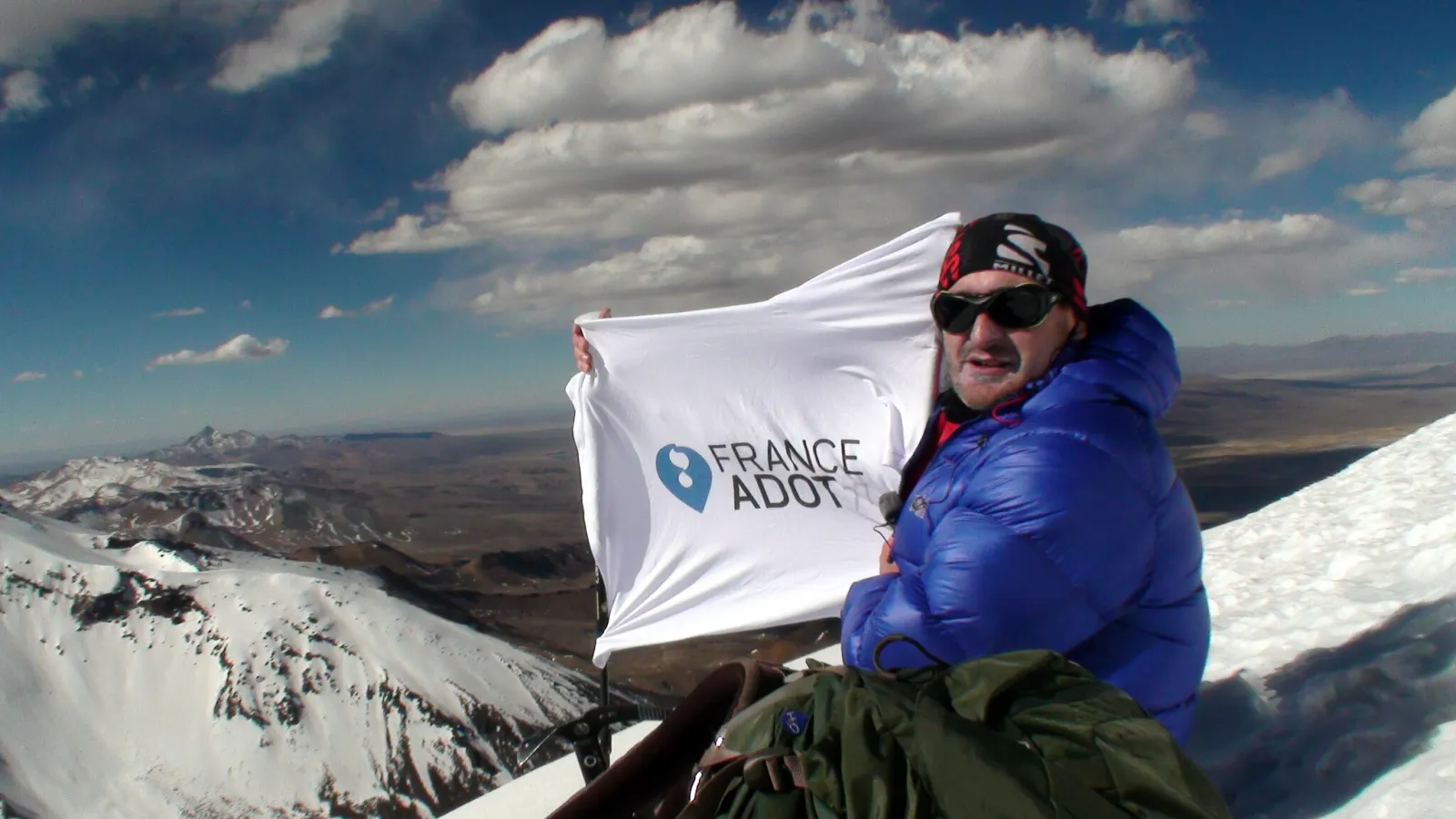
On 12 July 2013, Paul Baudry reached 6,136 metres on Parinacota, a volcano on the border between Bolivia and Chile. Paul has lived with a transplanted heart since 2009. No heart transplant recipient had climbed so high: the previous record, set by Sylvain Bédard of Quebec in 2004, stood at 6,120 metres. Paul climbed with his friends Alain Dutrévis and Guillaume Orsal, and the three of them went to Bolivia to promote organ donation.
The expedition
In 2012, on Chopicalqui in Peru, Paul had to stop at 5,300 metres. For 2013 we chose Bolivia, where the Altiplano lets you acclimatise even at rest. The Millet Expedition Project, a grant run by the mountain gear maker Millet and its partners, picked our team as one of its six winners that year.
We left Paris on 23 June. After a few days in La Paz, at 3,600 metres, and a hike on the Isla del Sol in Lake Titicaca, we spent a week at a base camp at 4,700 metres in the Cordillera Real, north of La Paz. Snow or sleet fell almost every day. Paul climbed the shoulder of Qulin Tuqu, at 5,120 metres, then Wila Lluxita, at 5,244 metres, after eight hours of hard going.
We then drove 230 kilometres to the village of Sajama, in the Cordillera Occidental, south-west of La Paz. On 9 July, on Acotango (6,052 metres), steep slopes of penitentes wore Paul out and he turned back at 5,850 metres; Guillaume reached the summit.
On 12 July, our last possible day, we set off from the high camp on Parinacota, at 5,150 metres, in fine weather and good snow. After eleven and a half hours of climbing, Paul’s watch read 6,136 metres. It was 4:30 pm and the summit was still two hours away, so Paul and Alain turned back while Guillaume went on to the top. We were back at the high camp at 7:30 pm, by headlamp. Paul’s explanation:
“The secret of my success was probably going slowly: never in the red for long, drinking and resting regularly.”
A transplanted heart at altitude
A transplanted heart is no longer connected to the nervous system, so it speeds up more slowly with effort, and the anti-rejection drugs reduce muscle efficiency. Before the expedition, Dr Jean-Claude Verdier, a sports cardiologist and member of the team, put Paul through an exercise test and followed his preparation.